What are the differences between PFA, PTFE, and FEP?
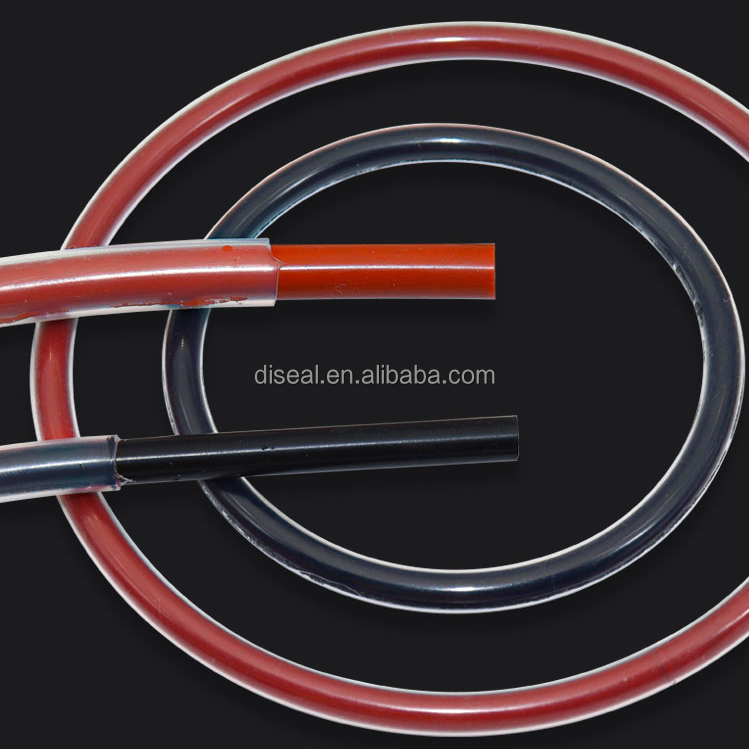
If FEP (F46) can be considered a "modified version" of PTFE (Teflon) created for easier processing, then PFA (Perfluoroalkoxy) can be seen as the "ultimate version" that combines the best of both worlds. It possesses the high-temperature resistance of PTFE and the excellent processability of FEP, which is why it is often referred to as soluble polytetrafluoroethylene.
To help you understand the relationships among these three more clearly, we can compare their core properties and applications through a table:
| Aspect | PFA (Perfluoroalkoxy) | PTFE (Polytetrafluoroethylene) | FEP (Fluorinated Ethylene Propylene) |
|---|---|---|---|
| Chemical Nature | Copolymer of tetrafluoroethylene and perfluoroalkoxy vinyl ether | Homopolymer of tetrafluoroethylene | Copolymer of tetrafluoroethylene and hexafluoropropylene |
| Processing Method | Thermoplastic, can be melt-processed (injection molding, extrusion), offering excellent processability | Non-thermoplastic, cannot be processed by conventional melt methods due to extremely high melt viscosity; requires compression molding and sintering | Thermoplastic, can be melt-processed (injection molding, extrusion), offering good processability |
| Max. Service Temp. | Long-term service temperature up to 260°C, comparable to PTFE | Long-term service temperature up to 260°C | Long-term service temperature approx. 200°C |
| Chemical Resistance | Excellent, comparable to PTFE, resistant to almost all chemicals | Excellent, possesses the most outstanding chemical inertness | Excellent, similar to PTFE |
| Transparency | Translucent | Opaque, milky white appearance | Transparent to translucent, the clearest among the three |
| Mechanical Properties | Better mechanical properties than FEP at high temperatures; better creep resistance and compressive strength than PTFE | Relatively soft, prone to creep under long-term load | Properties similar to PTFE, but creep resistance above 100°C is not as good as PTFE |
For ultimate high-temperature and chemical resistance with simple part shapes: Choose PTFE. It's the "gold standard" for performance, but processing is difficult and costs are higher.
For high-temperature resistance (~260°C), high purity, and complex part shapes: PFA is the ideal choice. It is commonly used in the semiconductor industry for high-purity chemical piping, valves, and fittings, making it the preferred material for the most demanding applications.
For ease of processing, cost control, and service temperatures below 200°C: FEP offers the best value. It is widely used for wire and cable insulation, tubing, and transparent parts, serving as a "versatile player" in industrial production and everyday applications.
Contact: Betty Huang
Phone: +8617576003274
E-mail: diseals@aliyun.com
Whatsapp:+8617576003274
Add: 4th Floor, Building 6, Liutao Creative Industry Park, Dianhai Street, Dianbai District, Maoming City,Post code:525000
We chat